
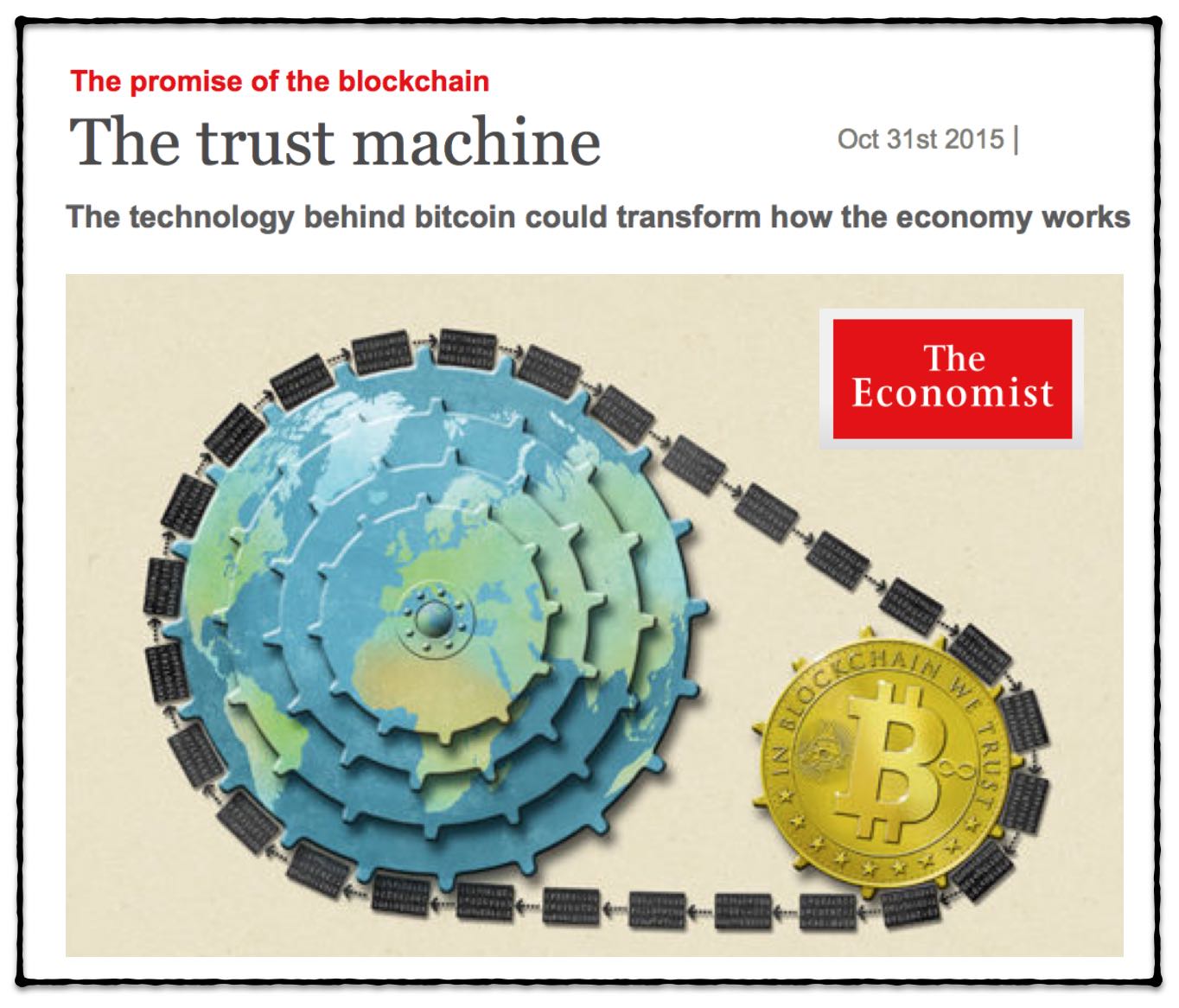
Ever heard someone call blockchain the "trust machine" and wondered what on earth they were talking about? It sounds like something straight out of a sci-fi movie, right? But beneath the jargon lies a powerful idea that's changing how we think about security, transparency, and well, trust, in the digital age.
For ages, we've relied on intermediaries – banks, governments, notaries – to verify transactions and ensure fairness. This reliance isn't always ideal. It can lead to delays, high fees, and even the potential for manipulation or corruption. We're handing over our trust to centralized entities, hoping they'll act in our best interests. But what if there was a better way?
That's where the "trust machine" moniker comes in. Blockchain earns this nickname because it creates a system where trust isn't placed in a single authority, but rather, is distributed across a network. It's a shared, immutable ledger of transactions, meaning once something is recorded, it can't be changed. Every participant in the network has a copy of this ledger, and transactions are verified through consensus, making it incredibly difficult to tamper with the data. In essence, blockchain automates trust, eliminating the need for a central gatekeeper.
So, the next time you hear someone mention "blockchain" and "trust machine" in the same breath, remember it's about shifting away from relying on centralized authorities towards a system of distributed trust, transparency, and immutability. This concept is fundamental to understanding the potential of blockchain technology across various industries, from finance and supply chain management to healthcare and voting systems. Blockchain offers a new paradigm for verifying information and conducting transactions with greater security and reliability.
Why Does Decentralization Matter?
I remember the first time I truly grasped the power of decentralization. I was helping a friend set up a small online store. She was frustrated with the transaction fees and the waiting period imposed by the payment processor. It felt like they had complete control over her business. Exploring blockchain-based payment options opened my eyes to the possibilities of cutting out the middleman. This led me to understand why decentralization is so important for so many people, particularly in countries where centralized systems aren't as reliable or accessible. Decentralization, in the context of blockchain, ensures that no single entity controls the network. This makes it more resistant to censorship, manipulation, and single points of failure. It empowers individuals and businesses by giving them more control over their data and transactions. The "trust machine" aspect of blockchain stems directly from this decentralized structure. Because the network is distributed, validating transactions requires consensus from multiple participants. This process adds a layer of security that's hard to achieve with centralized systems, where a single compromised authority can bring the whole thing down. Blockchain's immutability further reinforces the "trust machine" concept. Once a transaction is recorded on the blockchain, it cannot be altered or deleted. This creates a permanent, verifiable record that all participants can access, fostering greater transparency and accountability. Ultimately, decentralization is the bedrock upon which the "trust machine" is built, enabling a more equitable and secure digital ecosystem.
How Does Blockchain Achieve Immutability?
Immutability, the unchangeable nature of blockchain records, is crucial to its trustworthiness. Think of it like a digital fingerprint that's permanently etched onto a shared ledger. This is accomplished through a combination of cryptographic hashing and distributed consensus. When a transaction occurs, it's grouped with other recent transactions into a "block." This block is then cryptographically hashed, meaning it's transformed into a unique string of characters. Any change to the transaction, even a single comma, will result in a completely different hash. This hash acts like a fingerprint for the block. Each block also contains the hash of the previous block in the chain, creating a chronological and interconnected sequence. This chain of hashes makes it incredibly difficult to tamper with the blockchain. If someone were to try to alter a past transaction, they would need to recalculate the hash of that block and all subsequent blocks, which would require an enormous amount of computing power. Furthermore, because the blockchain is distributed across a network of computers, the attacker would need to control a majority of the network's computing power (known as a 51% attack) to successfully rewrite the entire blockchain. This is why blockchain is considered so secure and immutable. The "trust machine" works because you can be confident that the records on the blockchain haven't been tampered with. This transparency and security are essential for various applications, such as tracking supply chains, verifying identities, and conducting secure financial transactions. The cryptographic hashing and distributed consensus mechanisms work together to create an unchangeable and trustworthy ledger.
The History and Myth of the "Trust Machine"
The term "trust machine" gained traction alongside the rise of Bitcoin and the broader blockchain ecosystem. While the technology itself is relatively new, the underlying concepts have roots in cryptography and distributed computing that date back decades. The myth surrounding the "trust machine" often paints it as a perfect solution to all trust-related problems. Proponents suggest that blockchain can eliminate corruption, fraud, and the need for intermediaries altogether. However, the reality is more nuanced. While blockchain can certainly enhance trust in specific contexts, it's not a silver bullet. There are limitations and trade-offs to consider. For example, while the blockchain itself is immutable, the data that's recorded on it is only as reliable as the information source. If the initial data is flawed or malicious, the blockchain will simply record that flawed data immutably. This is often referred to as the "garbage in, garbage out" problem. Furthermore, the scalability and energy consumption of some blockchain networks have raised concerns about their long-term viability. Despite these limitations, the "trust machine" narrative has been instrumental in popularizing blockchain technology and attracting investment. It captures the potential of blockchain to create more transparent, secure, and decentralized systems. As the technology matures, it's important to separate the hype from the reality and focus on its practical applications. The "trust machine" is a powerful concept, but it's essential to approach it with a critical and informed perspective. We need to understand both its strengths and limitations to effectively leverage its potential.
The Hidden Secrets of the "Trust Machine"
One of the less discussed aspects of the "trust machine" is its reliance on human-designed systems and the potential for biases to be embedded within them. While blockchain eliminates the need for trust in a central authority, it shifts the trust to the underlying code and the developers who created it. The algorithms and smart contracts that govern blockchain networks are written by humans, and they can reflect the biases and assumptions of their creators. This can lead to unintended consequences and unfair outcomes. For example, if a smart contract is designed to automatically allocate resources based on certain criteria, and those criteria are biased against a particular group, the blockchain will perpetuate that bias. Another hidden secret is the importance of key management. In most blockchain systems, access to your digital assets is controlled by a private key. If you lose your private key, you lose access to your assets. There's no central authority that can recover your key for you. This puts a significant responsibility on individuals to securely store and manage their keys. The "trust machine" can only function effectively if individuals are able to protect their private keys and avoid becoming victims of scams or phishing attacks. Furthermore, the transparency of blockchain can also be a double-edged sword. While it enhances accountability, it also exposes sensitive information to potential surveillance. Privacy-enhancing technologies, such as zero-knowledge proofs and confidential transactions, are being developed to address this concern, but they are not yet widely adopted. Therefore, while blockchain provides a powerful mechanism for establishing trust, it's crucial to understand its limitations and the potential for unintended consequences. A holistic approach is needed, one that considers both the technical aspects and the social implications of this technology.
Recommendations for Understanding the "Trust Machine"
If you're serious about understanding the "trust machine," my first recommendation is to dive into the fundamentals of cryptography and distributed systems. Grasping these underlying concepts will provide a solid foundation for comprehending how blockchain works and why it's considered trustworthy. Don't just rely on surface-level explanations. Get your hands dirty by experimenting with blockchain technologies. Create a digital wallet, participate in a decentralized application (d App), or even try deploying a simple smart contract. Experiential learning is invaluable for internalizing the concepts and appreciating the nuances of the technology. Stay up-to-date with the latest developments in the blockchain space. This field is rapidly evolving, and new protocols, technologies, and use cases are constantly emerging. Follow reputable news sources, attend industry conferences, and engage with online communities. Be critical of the information you consume. There's a lot of hype and misinformation surrounding blockchain, so it's important to evaluate claims carefully and consider multiple perspectives. Look for evidence-based analysis and avoid blindly accepting everything you read. Engage in discussions and debates with others in the blockchain community. Sharing your thoughts and hearing different viewpoints will broaden your understanding and challenge your assumptions. Join online forums, attend local meetups, or participate in online courses. Remember that the "trust machine" is not a perfect solution. It has limitations and trade-offs, and it's not suitable for every application. Be realistic about its potential and avoid falling prey to unrealistic expectations. Focus on the practical applications of blockchain and how it can solve real-world problems. Consider the ethical implications of this technology and how it can be used responsibly. Ultimately, the "trust machine" is a powerful tool, but it's up to us to use it wisely and ethically.
Delving Deeper into Consensus Mechanisms
Consensus mechanisms are the heart of the "trust machine," the algorithms that enable a distributed network to agree on the validity of transactions and the state of the blockchain. Different blockchains employ different consensus mechanisms, each with its own strengths and weaknesses. Proof-of-Work (Po W), used by Bitcoin, is one of the oldest and most widely known consensus mechanisms. It involves miners competing to solve complex cryptographic puzzles. The miner who solves the puzzle first gets to add the next block to the blockchain and is rewarded with newly minted cryptocurrency. Po W is considered secure but computationally intensive and energy-consuming. Proof-of-Stake (Po S) is an alternative consensus mechanism that aims to address the energy consumption issues of Po W. In Po S, validators are chosen to create new blocks based on the number of cryptocurrency they hold and are willing to "stake" as collateral. Po S is generally more energy-efficient than Po W but can be more susceptible to certain types of attacks. Delegated Proof-of-Stake (DPo S) is a variation of Po S where token holders delegate their voting power to a smaller group of delegates who are responsible for validating transactions and creating new blocks. DPo S is often faster and more scalable than Po W and Po S but can be more centralized. Other consensus mechanisms include Proof-of-Authority (Po A), which relies on a pre-selected group of trusted validators, and Byzantine Fault Tolerance (BFT), which is designed to tolerate malicious actors in the network. Understanding the different consensus mechanisms is crucial for evaluating the security, scalability, and energy efficiency of different blockchain networks. The choice of consensus mechanism has a significant impact on the overall characteristics of the "trust machine."
Tips for Navigating the "Trust Machine" Landscape
Navigating the world of blockchain and the "trust machine" can be overwhelming, especially for newcomers. Here are some practical tips to help you stay informed and avoid common pitfalls. First, be wary of hype and unrealistic promises. The blockchain space is full of projects that promise to revolutionize entire industries, but many of them fail to deliver. Do your own research and be critical of claims that sound too good to be true. Second, focus on understanding the fundamentals. Don't get caught up in the technical jargon without first grasping the basic concepts of cryptography, distributed systems, and consensus mechanisms. Third, diversify your sources of information. Don't rely solely on news articles or social media posts. Read academic papers, technical documentation, and engage with experts in the field. Fourth, be cautious when investing in cryptocurrencies or blockchain projects. The market is highly volatile, and there's a significant risk of losing your money. Only invest what you can afford to lose and never put all your eggs in one basket. Fifth, protect your private keys. Your private keys are the keys to your digital assets, so it's crucial to store them securely. Use a hardware wallet, a strong password, and enable two-factor authentication. Sixth, be aware of scams and phishing attacks. The blockchain space is a target for scammers, so be vigilant and never share your private keys with anyone. Seventh, stay up-to-date with the latest regulations. The legal and regulatory landscape surrounding blockchain is constantly evolving, so it's important to stay informed about the rules and guidelines in your jurisdiction. By following these tips, you can navigate the "trust machine" landscape with greater confidence and avoid common mistakes.
The Role of Smart Contracts in the "Trust Machine"
Smart contracts are self-executing contracts written in code and stored on the blockchain. They automatically enforce the terms of an agreement between parties, eliminating the need for intermediaries and reducing the risk of fraud or manipulation. Smart contracts are a key component of the "trust machine" because they automate trust and enable secure and transparent transactions. When a smart contract is deployed on the blockchain, it becomes immutable and cannot be altered. This ensures that the terms of the agreement are enforced as written. The code of the smart contract is also publicly visible, allowing anyone to verify its functionality. Smart contracts can be used for a wide range of applications, including supply chain management, voting systems, insurance, and financial services. For example, a smart contract could be used to automatically release payment to a supplier once goods have been delivered and verified. Or, a smart contract could be used to ensure that votes in an election are counted accurately and securely. The use of smart contracts can significantly reduce costs, increase efficiency, and enhance transparency in various industries. However, smart contracts are not without their limitations. They are only as good as the code they are written in, and errors or vulnerabilities in the code can lead to unintended consequences. It's also important to ensure that smart contracts comply with legal and regulatory requirements. Despite these limitations, smart contracts have the potential to revolutionize the way we conduct business and interact with each other. They are a powerful tool for building trust and enabling secure and transparent transactions.
Fun Facts about the "Trust Machine"
Did you know that the first blockchain, Bitcoin, was created by an anonymous person or group using the pseudonym Satoshi Nakamoto? To this day, no one knows who Satoshi Nakamoto is, adding an element of mystery to the "trust machine" story. Another fun fact is that the term "blockchain" was not initially used to describe the technology. In the original Bitcoin whitepaper, Satoshi Nakamoto referred to it as a "timechain." The term "blockchain" emerged later as the technology gained popularity. Blockchain technology has inspired a vibrant community of developers, entrepreneurs, and researchers who are constantly innovating and pushing the boundaries of what's possible. From decentralized finance (De Fi) to non-fungible tokens (NFTs), the blockchain ecosystem is constantly evolving. The "trust machine" is not just about technology; it's also about community and collaboration. Blockchain has the potential to disrupt traditional industries and create new economic opportunities. From supply chain management to voting systems, blockchain is being used to solve real-world problems and improve people's lives. Blockchain has even been used to track the provenance of luxury goods, ensuring that they are authentic and ethically sourced. So, the next time you hear someone talk about the "trust machine," remember that it's not just a buzzword; it's a revolutionary technology with the potential to transform the world we live in.
How to Build Your Own "Trust Machine" (Simplified)
While building a fully functional blockchain from scratch is a complex undertaking, understanding the basic steps can demystify the process. Here's a simplified overview: First, you need to define the structure of your blocks. Each block will contain data (like transaction details), a timestamp, and a hash of the previous block. Next, you need to implement a hashing algorithm. This algorithm will take the data in the block and generate a unique "fingerprint" (the hash). SHA-256 is a commonly used hashing algorithm. You also need to implement a consensus mechanism. This is the rule set that determines how new blocks are added to the blockchain. Proof-of-Work and Proof-of-Stake are two popular options. You'll need to set up a peer-to-peer network. This allows different computers (nodes) to communicate with each other and share the blockchain data. Implement transaction verification. Before a transaction is added to a block, it needs to be verified to ensure it's valid and that the sender has sufficient funds. Once a block is created and verified, it's added to the blockchain. This involves updating the ledger and distributing the new block to all nodes in the network. Finally, you'll need to create a user interface. This allows users to interact with the blockchain, send and receive transactions, and view the blockchain data. Keep in mind this is a highly simplified overview. Building a robust and secure blockchain requires deep knowledge of cryptography, networking, and distributed systems. Many open-source blockchain platforms are available that can be used as a starting point.
What If the "Trust Machine" Fails?
The concept of the "trust machine" rests on the security and reliability of blockchain technology. But what happens if the underlying technology fails? Several scenarios could lead to a breakdown of trust in blockchain systems. A 51% attack occurs when a single entity or group controls a majority of the network's computing power. This allows them to rewrite the blockchain history and potentially double-spend cryptocurrency. Code vulnerabilities in smart contracts can be exploited by hackers to steal funds or manipulate the contract's behavior. Key management issues, such as lost or stolen private keys, can lead to irreversible loss of access to digital assets. Regulatory uncertainty can stifle innovation and adoption of blockchain technology, undermining its potential to create trust. Scalability issues, such as slow transaction speeds and high fees, can make blockchain systems impractical for widespread use. If the "trust machine" fails, the consequences could be significant. Loss of confidence in cryptocurrencies and other blockchain-based applications could lead to a sharp decline in their value. Businesses and individuals who rely on blockchain for secure transactions could suffer financial losses. The reputation of blockchain technology as a whole could be tarnished, hindering its adoption and development. It's crucial to address these potential risks and ensure that blockchain systems are designed and implemented with security, scalability, and regulatory compliance in mind. The long-term success of the "trust machine" depends on our ability to mitigate these risks and maintain trust in the underlying technology.
Listicle: 5 Ways the "Trust Machine" is Changing the World
The "trust machine," or blockchain technology, is making waves across various sectors. Here are five significant ways it's changing the world: 1. Revolutionizing Finance: Decentralized Finance (De Fi) is built on blockchain, offering alternatives to traditional banking. Think lending, borrowing, and trading without intermediaries, all governed by smart contracts. 2. Enhancing Supply Chain Transparency: Blockchain enables end-to-end tracking of products, from origin to consumer. This builds trust by verifying authenticity and ethical sourcing. 3. Securing Digital Identities: Blockchain-based identity management systems allow individuals to control their personal data and prevent identity theft. 4. Transforming Voting Systems: Blockchain can create more secure and transparent voting processes, reducing the risk of fraud and increasing voter participation. 5. Empowering Creators and Artists: Non-Fungible Tokens (NFTs) allow artists to tokenize their work and sell it directly to collectors, cutting out intermediaries and ensuring fair compensation. These are just a few examples of how the "trust machine" is reshaping industries and empowering individuals. As the technology matures, we can expect to see even more innovative applications emerge.
Question and Answer: The "Trust Machine" Explained
Here are some common questions about why blockchain is called the "trust machine," answered for clarity:
Q: What does it mean to call blockchain the "trust machine?"
A: It means that blockchain creates a system where trust is built into the technology itself, rather than relying on intermediaries or central authorities. The shared, immutable ledger and consensus mechanisms ensure that transactions are verified and recorded accurately, reducing the need for trust between parties.
Q: How does blockchain eliminate the need for trust?
A: Blockchain doesn't completely eliminate the need for trust, but it shifts it. Instead of trusting a central authority, you're trusting the underlying code, the network of participants, and the cryptographic principles that secure the blockchain. The transparent and verifiable nature of the blockchain makes it difficult to cheat or manipulate the system.
Q: Is the "trust machine" truly foolproof?
A: No, the "trust machine" is not perfect. It's still vulnerable to certain types of attacks, such as 51% attacks or vulnerabilities in smart contract code. It's also important to remember that the data recorded on the blockchain is only as reliable as the source of the data. "Garbage in, garbage out" still applies.
Q: What are the benefits of using a "trust machine?"
A: The benefits include increased transparency, reduced costs, improved security, and greater efficiency. By eliminating intermediaries and automating trust, blockchain can streamline processes and create new opportunities for innovation.
Conclusion of Why Blockchain is Called the "Trust Machine"
Blockchain's moniker as the "trust machine" is well-earned. Its decentralized, immutable, and transparent nature provides a technological foundation for establishing trust in various applications. From revolutionizing finance to securing digital identities, the potential of blockchain is vast and transformative. However, it's crucial to acknowledge its limitations and challenges, including scalability issues, security vulnerabilities, and regulatory uncertainty. As we continue to explore and develop blockchain technology, a balanced and informed approach is essential to harness its full potential and mitigate its risks. By understanding the underlying principles, staying informed about the latest developments, and addressing the ethical considerations, we can unlock the true power of the "trust machine" and build a more secure, transparent, and equitable digital future.
