
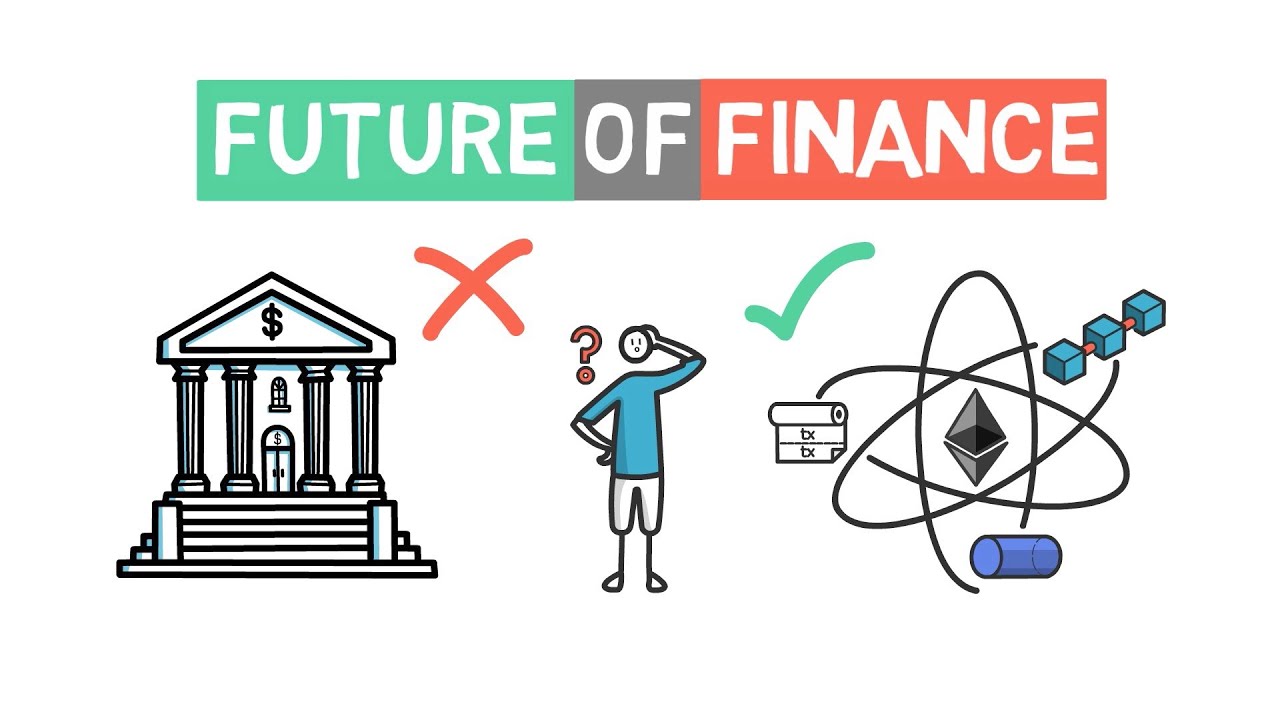
What is De Fi? Unlocking the Future of Finance - Explained!
Is traditional finance leaving you behind? Decentralized Finance (De Fi) is poised to revolutionize how we interact with money, offering a more accessible, transparent, and efficient financial system for everyone.
Introduction
Decentralized Finance, or De Fi, represents a paradigm shift in the world of finance. Instead of relying on centralized intermediaries like banks and brokers, De Fi leverages blockchain technology to create open, permissionless, and transparent financial services. This allows individuals to access loans, trade assets, earn interest, and much more, all without the need for traditional financial institutions. De Fi is not just a trend; it is a movement towards a more democratized and accessible financial future. The allure of De Fi lies in its potential to empower individuals and small businesses, offering financial services that were previously unavailable or prohibitively expensive.
The evolution of De Fi can be traced back to the emergence of Bitcoin in 2009, the first successful implementation of blockchain technology. Bitcoin demonstrated the possibility of decentralized digital currency, paving the way for more complex financial applications. The rise of Ethereum in 2015, with its smart contract functionality, provided the platform for building decentralized applications (d Apps), which are the building blocks of De Fi. Early De Fi projects focused on decentralized exchanges (DEXs) and lending platforms, offering users the ability to trade and borrow cryptocurrencies without intermediaries. Over time, the De Fi ecosystem has expanded to include a wide range of financial instruments and services, such as yield farming, stablecoins, insurance, and asset management.
One of the key benefits of De Fi is itsaccessibility. Anyone with an internet connection and a cryptocurrency wallet can participate in De Fi protocols, regardless of their location or credit score. This contrasts sharply with traditional finance, where access is often restricted by geographical boundaries, regulatory hurdles, and creditworthiness requirements. De Fi also offers transparency, as all transactions are recorded on a public blockchain, making it easy to audit and verify financial activities. This transparency can help to reduce fraud and increase trust in the financial system. Another significant advantage of De Fi is its*efficiency. By automating financial processes with smart contracts, De Fi can eliminate the need for intermediaries, reducing costs and speeding up transactions. The impact of De Fi is already being felt across various industries. For example, small businesses in developing countries can access loans through De Fi platforms, bypassing traditional banks that may be reluctant to lend to them. Individuals can earn passive income by lending their cryptocurrency holdings on De Fi lending platforms. Traders can execute complex financial strategies on decentralized exchanges without the need for brokerage accounts. A real-world example of De Fi application is Compound, a popular lending platform that allows users to earn interest on their deposited cryptocurrency. Another case is Uniswap, a decentralized exchange that permits trading tokens without the need for a centralized order book, increasing efficiency and accessibility.
##
Industry Statistics & Data
The growth of De Fi has been nothing short of remarkable, as evidenced by several key industry statistics.
*Total Value Locked (TVL): According to De Fi Llama, the Total Value Locked (TVL) in De Fi protocols peaked at over \$100 billion in 2021. This indicates the total value of assets deposited in various De Fi platforms. While the market has experienced volatility, the TVL remains significant, showcasing the ongoing adoption and interest in De Fi.
Source: De Fi Llama
*De Fi User Growth: A report by Statista shows that the number of De Fi users has grown exponentially over the past few years, reaching millions of users globally. This demonstrates the increasing awareness and adoption of De Fi among both retail and institutional investors.
Source: Statista
*Decentralized Exchange (DEX) Volume: Data from Coin Gecko indicates that the daily trading volume on decentralized exchanges has surpassed billions of dollars on certain days. This highlights the growing popularity of DEXs as an alternative to centralized exchanges.
Source: Coin Gecko
These numbers paint a clear picture of the expanding De Fi landscape. The increasing TVL signifies growing investor confidence and participation. User growth demonstrates a broader acceptance of De Fi solutions. The high trading volumes on DEXs reflect a shift towards decentralized trading platforms. While the industry is still nascent and faces challenges, these statistics underscore the potential of De Fi to transform the financial system.
##
Core Components
De Fi comprises several core components that work together to create a decentralized financial ecosystem. These include:
Decentralized Exchanges (DEXs)
Decentralized Exchanges (DEXs) are platforms that enable users to trade cryptocurrencies directly with each other, without the need for a central intermediary like a traditional exchange. This is achieved through smart contracts, which automatically execute trades based on predefined conditions. DEXs offer several advantages over centralized exchanges, including greater privacy, lower fees, and increased security. Users retain control of their funds at all times, eliminating the risk of losing their assets due to hacks or mismanagement. DEXs also promote greater transparency, as all trades are recorded on a public blockchain, making it easy to audit and verify trading activity. One of the most popular types of DEX is the Automated Market Maker (AMM), which uses liquidity pools to facilitate trading. AMMs allow users to provide liquidity to the pool by depositing cryptocurrencies, earning a portion of the trading fees in return. Uniswap and Sushi Swap are examples of successful AMMs. The advent of DEXs has significantly democratized access to cryptocurrency trading, allowing anyone to participate in the market without the need for a brokerage account or KYC (Know Your Customer) verification. A real-world application of DEXs can be seen in emerging markets where access to traditional financial services is limited. Individuals can use DEXs to trade cryptocurrencies and participate in the global financial system.
Lending and Borrowing Platforms
Lending and borrowing platforms are a critical component of the De Fi ecosystem, allowing users to earn interest on their cryptocurrency holdings or borrow funds by providing collateral. These platforms use smart contracts to match lenders and borrowers, automating the entire process and eliminating the need for intermediaries. Lenders deposit their cryptocurrencies into a pool, earning interest from borrowers who take out loans. Borrowers must provide collateral, typically in the form of other cryptocurrencies, to secure their loans. The interest rates are determined by supply and demand, with higher demand leading to higher interest rates. One of the main advantages of De Fi lending platforms is their accessibility. Anyone with a cryptocurrency wallet can participate, regardless of their location or credit score. De Fi lending platforms also offer greater transparency, as all loan transactions are recorded on a public blockchain. Aave and Compound are examples of well-known De Fi lending platforms. A case study highlighting the impact of De Fi lending platforms is their use by small businesses in developing countries. These businesses can access loans through De Fi platforms, bypassing traditional banks that may be reluctant to lend to them due to lack of credit history or collateral. This can help these businesses to grow and create jobs.
Stablecoins
Stablecoins are cryptocurrencies designed to maintain a stable value, typically pegged to a fiat currency like the US dollar. They play a vital role in the De Fi ecosystem by providing a stable medium of exchange and a safe haven from the volatility of other cryptocurrencies. Stablecoins are used for trading, lending, borrowing, and other financial activities, providing a bridge between the traditional financial system and the De Fi world. There are several types of stablecoins, including fiat-backed stablecoins, cryptocurrency-backed stablecoins, and algorithmic stablecoins. Fiat-backed stablecoins are backed by reserves of fiat currency held in a bank account. Cryptocurrency-backed stablecoins are backed by reserves of other cryptocurrencies. Algorithmic stablecoins use algorithms to maintain their peg to a fiat currency. Tether (USDT), USD Coin (USDC), and Dai are examples of popular stablecoins. Dai, in particular, is an example of a cryptocurrency-backed stablecoin. Its stability mechanisms and governance are more transparent. The stability of stablecoins allows users to participate in De Fi protocols without worrying about the volatility of other cryptocurrencies, which can be a deterrent for many potential users. The widespread adoption of stablecoins has been crucial to the growth of the De Fi ecosystem.
Yield Farming
Yield farming, also known as liquidity mining, is a strategy used to maximize returns in the De Fi ecosystem. It involves providing liquidity to De Fi protocols in exchange for rewards, typically in the form of governance tokens or a share of the trading fees. Yield farmers move their cryptocurrencies between different De Fi protocols to find the highest yields, constantly optimizing their positions to maximize their returns. This can be a complex and time-consuming process, requiring a deep understanding of the De Fi ecosystem and the various protocols involved. Yield farming is often associated with high risks, as it involves participating in new and experimental protocols. However, it can also offer significant rewards for those who are willing to take on the risk. A real-world application of yield farming is providing liquidity to a decentralized exchange. By depositing cryptocurrencies into a liquidity pool, users can earn a portion of the trading fees generated by the exchange. This incentivizes users to provide liquidity, which helps to improve the liquidity of the exchange and reduce slippage for traders. The rise of yield farming has significantly increased the liquidity and activity in the De Fi ecosystem. It has also led to the creation of new and innovative De Fi protocols.
##
Common Misconceptions
Despite the growing popularity of De Fi, several common misconceptions surround it. Addressing these misconceptions is crucial for fostering a better understanding of the technology.
*Misconception 1: De Fi is Only for Tech Experts: One prevalent misconception is that De Fi is too complex for the average person to understand and use. While the underlying technology may be intricate, many De Fi platforms are designed with user-friendly interfaces, making them accessible to individuals with limited technical knowledge. Furthermore, numerous educational resources are available to help users learn about De Fi and how to participate in the ecosystem. Platforms are constantly evolving to improve user experience and simplify complex processes. Counter-evidence lies in the increasing number of non-technical users participating in De Fi, demonstrating that it is not solely the domain of tech experts.
*Misconception 2: De Fi is Unregulated and Therefore Risky: Another common misconception is that De Fi is entirely unregulated and therefore inherently risky. While it is true that the regulatory landscape for De Fi is still evolving, this does not mean that it is a lawless environment. Many De Fi protocols are designed with security and compliance in mind, and some jurisdictions are beginning to develop regulatory frameworks for De Fi activities. Furthermore, users can take steps to mitigate risks by carefully researching De Fi protocols, diversifying their investments, and using security tools such as hardware wallets. The evolving regulatory landscape is pushing De Fi protocols towards greater accountability and transparency.
*Misconception 3: De Fi is a Scam: A third misconception is that all De Fi projects are scams or Ponzi schemes. While it is true that there have been some fraudulent projects in the De Fi space, this does not mean that all De Fi projects are scams. Many legitimate and innovative De Fi projects are working to build a more open and accessible financial system. Users should exercise caution and conduct thorough research before investing in any De Fi project, but it is unfair to dismiss the entire ecosystem as a scam. Due diligence and a critical mindset are essential when evaluating any investment opportunity, including those in the De Fi space.
##
Comparative Analysis
De Fi represents a fundamentally different approach to finance compared to traditional systems. While both aim to provide financial services, they differ significantly in their underlying architecture, accessibility, and transparency. Understanding the strengths and weaknesses of each approach is essential for navigating the evolving financial landscape.
*Traditional Finance:
*Pros:
Established regulatory frameworks provide a level of consumer protection.
Widespread adoption and familiarity make it accessible to a broad range of users.
Established institutions offer trust and security (though not always justified). *Cons:
Limited accessibility for unbanked or underbanked populations.
High fees and transaction costs due to intermediaries.
Lack of transparency and potential for corruption.
*De Fi:
*Pros:
Open and permissionless access for anyone with an internet connection.
Lower fees and transaction costs due to automation and disintermediation.
Greater transparency and auditability through blockchain technology. *Cons:
Regulatory uncertainty and lack of consumer protection.
Volatility and risk associated with cryptocurrency assets.
Complexity and technical knowledge required for participation.
De Fi is superior in terms of accessibility, transparency, and efficiency. It offers financial services to individuals who are excluded from traditional finance, reduces costs through automation, and provides greater transparency through blockchain technology. However, traditional finance offers greater regulatory certainty and consumer protection. The choice between De Fi and traditional finance depends on individual needs and risk tolerance. The convergence of both financial systems, known as "Trad Fi" using De Fi elements, is also occurring, indicating a blended future.
##
Best Practices
Implementing De Fi solutions effectively requires adherence to industry best practices that promote security, transparency, and responsible innovation. By following these standards, businesses and individuals can maximize the benefits of De Fi while mitigating potential risks.
1.Thorough Protocol Research: Before engaging with any De Fi protocol, conduct extensive research to understand its underlying mechanics, security audits, and governance structure. Verify the team's credentials, review the project's documentation, and analyze its tokenomics.
2.Risk Management: Diversify De Fi investments across multiple protocols to mitigate the risk of losses from a single protocol failure. Allocate capital based on risk tolerance and avoid investing more than one can afford to lose. Implement stop-loss orders and other risk management tools to limit potential losses.
3.Secure Wallet Management: Use hardware wallets to store cryptocurrency assets securely offline. Enable two-factor authentication (2FA) for all De Fi accounts. Regularly update wallet software and practice safe password management.
4.Smart Contract Audits: Ensure that De Fi protocols have undergone rigorous smart contract audits by reputable security firms. Review audit reports to identify potential vulnerabilities and assess the project's overall security posture.
5.Stay Informed: Keep abreast of the latest developments in the De Fi space, including new protocols, regulatory changes, and security threats. Participate in De Fi communities and forums to learn from experienced users and stay informed about emerging trends.
*Common Challenges and Solutions:
1.Scalability: Many De Fi protocols suffer from scalability issues, leading to high transaction fees and slow transaction speeds.
*Solution: Utilize Layer 2 scaling solutions such as rollups and sidechains to improve transaction throughput and reduce fees.
2.Security Vulnerabilities: Smart contract vulnerabilities can lead to hacks and loss of funds.
*Solution: Implement rigorous security audits, formal verification, and bug bounty programs to identify and address potential vulnerabilities.
3.Regulatory Uncertainty: The lack of clear regulatory frameworks for De Fi creates uncertainty and hinders adoption.
*Solution: Engage with policymakers and regulators to advocate for clear and balanced regulations that foster innovation while protecting consumers.
##
Expert Insights
Industry leaders and researchers offer valuable insights into the current state and future potential of De Fi. Their perspectives provide a deeper understanding of the opportunities and challenges facing the ecosystem.
"De Fi has the potential to revolutionize finance by creating a more open, accessible, and transparent system. However, it is important to address the challenges of scalability, security, and regulation to ensure its long-term success." -Chris Dixon, General Partner at Andreessen Horowitz
Research findings from a study by the World Economic Forum highlight the transformative impact of De Fi on global financial inclusion. The study found that De Fi can provide access to financial services for underserved populations, reduce transaction costs, and promote financial innovation. The WEF also recognized the need for regulatory clarity and international cooperation to ensure the responsible development of De Fi.
A recent report by Messari analyzes the growth of the De Fi lending market, highlighting the increasing demand for decentralized credit and the potential for De Fi to disrupt traditional lending institutions. The report identified Aave and Compound as leading De Fi lending protocols, noting their innovative features and growing adoption.
##
Step-by-Step Guide
Participating in De Fi can seem daunting, but this step-by-step guide simplifies the process:
1.Set up a Cryptocurrency Wallet: Choose a reputable cryptocurrency wallet that supports De Fi protocols, such as Meta Mask or Trust Wallet. Download and install the wallet on a secure device.
2.Acquire Cryptocurrency: Purchase cryptocurrency, such as Ether (ETH) or stablecoins (USDC, DAI), from a centralized exchange or through a peer-to-peer platform. Transfer the cryptocurrency to your De Fi wallet.
3.Connect to a De Fi Protocol: Visit the website of a De Fi protocol, such as a decentralized exchange (Uniswap) or a lending platform (Aave). Connect your De Fi wallet to the protocol by clicking the "Connect Wallet" button and following the prompts.
4.Choose a De Fi Activity: Select a De Fi activity to participate in, such as trading, lending, borrowing, or yield farming. Research the protocol's terms and conditions, fees, and risks.
5.Execute the Transaction: Initiate the transaction by entering the desired amount of cryptocurrency and confirming the transaction in your De Fi wallet. Review the transaction details carefully before signing.
6.Monitor Your Position: Monitor your De Fi positions regularly to track your earnings, manage your risks, and adjust your strategies as needed. Use De Fi analytics tools to gain insights into your portfolio performance.
7.Stay Informed: Stay up-to-date on the latest developments in the De Fi space, including new protocols, security threats, and regulatory changes. Join De Fi communities and forums to learn from experienced users and stay informed about emerging trends.
##
Practical Applications
De Fi offers a wide range of practical applications that can transform various aspects of finance:
1.Decentralized Lending: Borrow funds without intermediaries using De Fi lending platforms like Aave or Compound. Provide collateral in the form of cryptocurrency and earn interest on deposited assets.
2.Yield Farming: Earn rewards by providing liquidity to De Fi protocols. Participate in yield farming programs to maximize returns on cryptocurrency holdings.
3.Decentralized Trading: Trade cryptocurrencies directly with other users on decentralized exchanges like Uniswap or Sushi Swap. Enjoy lower fees and greater control over funds compared to centralized exchanges.
*Essential Tools and Resources:
Meta Mask: A popular browser extension and mobile wallet for interacting with De Fi protocols. De Fi Llama: A data aggregator that tracks the total value locked (TVL) in De Fi protocols. *Coin Gecko: A cryptocurrency data platform that provides information on prices, market capitalization, and trading volume.
*Optimization Techniques:
1.Diversify Investments: Spread capital across multiple De Fi protocols to reduce risk.
2.Manage Gas Fees: Monitor gas prices and execute transactions during off-peak hours to minimize fees.
3.Stay Informed: Keep up with the latest developments in the De Fi space to make informed decisions.
##
Real-World Quotes & Testimonials
"De Fi is the future of finance. It will disrupt traditional financial institutions and empower individuals with greater control over their financial lives." -Changpeng Zhao (CZ), CEO of Binance
"I've been using De Fi lending platforms to earn passive income on my cryptocurrency holdings. The returns are significantly higher than what I would get from a traditional savings account." -Satisfied De Fi User
##
Common Questions
Here are some frequently asked questions about De Fi:1. Is De Fi Safe?
De Fi, while promising, does carry inherent risks. Smart contract vulnerabilities, impermanent loss on decentralized exchanges, and the potential for rug pulls are all legitimate concerns. Thoroughly researching each platform, understanding the code, and diversifying investments across multiple protocols are crucial safety measures. Furthermore, utilizing hardware wallets and being cautious of phishing attempts are paramount in securing digital assets within the De Fi space. The De Fi ecosystem continues to evolve, with security practices becoming more sophisticated; however, user vigilance remains the cornerstone of safety.
*2. How Does De Fi Compare to Traditional Finance in Terms of Fees?
Generally, De Fi can offer lower fees compared to traditional finance, especially for activities like remittances or trading. This is because De Fi eliminates intermediaries like banks and brokers, whose overhead costs contribute to fees. However, network congestion on blockchains like Ethereum can sometimes lead to high "gas fees," which are transaction costs paid to miners. These fees can fluctuate significantly, making De Fi transactions occasionally more expensive than their traditional counterparts. The ongoing development of Layer 2 scaling solutions aims to address this issue and provide consistently lower transaction costs within the De Fi space.
*3. What Cryptocurrencies are Used in De Fi?
While various cryptocurrencies can be used in De Fi, some are more prevalent than others. Ether (ETH), the native cryptocurrency of the Ethereum blockchain, is widely used as collateral, for paying transaction fees, and as a trading pair. Stablecoins like USD Coin (USDC) and Dai (DAI), pegged to the US dollar, provide stability in the often-volatile crypto market and are used for lending, borrowing, and trading. Tokens from specific De Fi protocols, often governance tokens, are also frequently used within their respective ecosystems, incentivizing participation and allowing holders to vote on protocol changes. Bitcoin, though less directly involved, can be "wrapped" as WBTC to be used in certain De Fi applications.
*4. What is Impermanent Loss in De Fi?
Impermanent loss is a potential risk for liquidity providers (LPs) on decentralized exchanges (DEXs). It occurs when the price ratio of the tokens deposited in a liquidity pool changes compared to holding them outside the pool. The loss is termed "impermanent" because it's unrealized until the LP withdraws their funds. If the price ratio returns to its original state, the loss disappears. However, if the LP withdraws when the price difference is significant, the loss becomes permanent. DEXs attempt to compensate for this risk by rewarding LPs with trading fees, but it's crucial for LPs to understand and manage the potential for impermanent loss before participating.
*5. Is De Fi Environmentally Friendly?
The environmental impact of De Fi depends largely on the underlying blockchain's consensus mechanism. Blockchains that use Proof-of-Work (Po W), like Bitcoin, consume substantial amounts of energy. Ethereum, while currently transitioning towards Proof-of-Stake (Po S), has historically been energy-intensive. Po S blockchains, on the other hand, require significantly less energy to operate, making them a more environmentally friendly option for De Fi applications. As Ethereum completes its transition to Po S and more De Fi projects launch on energy-efficient blockchains, the overall environmental impact of De Fi is expected to decrease.
*6. What is a Smart Contract?
A smart contract is a self-executing contract written in code and stored on a blockchain. It automatically enforces the terms of an agreement when pre-defined conditions are met, without the need for intermediaries. Smart contracts are the foundation of De Fi, enabling decentralized lending, borrowing, trading, and other financial services. They are transparent, immutable (cannot be altered once deployed), and auditable, providing a higher level of trust and security compared to traditional contracts. However, smart contracts are only as secure as their code, and vulnerabilities can be exploited by malicious actors.
##
Implementation Tips
Here are some actionable tips for effective De Fi implementation:
1.Start Small: Begin with small amounts of capital to gain experience and understanding of De Fi protocols before investing larger sums. This helps minimize risk during the learning process.
2.Prioritize Security: Use hardware wallets, enable 2FA, and practice safe password management to protect digital assets. Security is paramount in the De Fi space, so proactive measures are crucial.
3.Understand Impermanent Loss: Before providing liquidity to DEXs, understand the concept of impermanent loss and its potential impact on returns. Use tools to simulate and analyze potential losses.
4.Monitor Gas Fees: Be aware of network gas fees and execute transactions during off-peak hours to minimize costs. High gas fees can significantly impact the profitability of De Fi activities.
5.Stay Informed: Keep abreast of the latest developments in the De Fi space, including new protocols, security threats, and regulatory changes. Continuous learning is essential for navigating the evolving landscape.
*Recommended Tools and Methods:
Meta Mask: A popular browser extension and mobile wallet for interacting with De Fi protocols. De Fi Llama: A data aggregator that tracks the total value locked (TVL) in De Fi protocols. *Rug Doc: A platform for researching and assessing the risks associated with De Fi projects.
##
User Case Studies
*Case Study 1: Small Business Lending in Emerging Markets
A small business owner in a developing country used a De Fi lending platform to access capital for expansion. Traditional banks were unwilling to lend to the business due to lack of credit history and collateral. Through a De Fi platform, the business owner was able to borrow funds by providing cryptocurrency as collateral. The loan enabled the business to purchase new equipment and increase production, leading to a 30% increase in revenue.
*Case Study 2: Decentralized Trading for Retail Investors
A retail investor used a decentralized exchange (DEX) to trade cryptocurrencies without the need for a brokerage account. The investor was able to access a wider range of tokens and enjoy lower trading fees compared to centralized exchanges. Over time, the investor's portfolio grew significantly, outperforming traditional investment strategies.
##
Future Outlook
The future of De Fi is promising, with several emerging trends poised to shape the industry.
1.Layer 2 Scaling Solutions: Layer 2 scaling solutions such as rollups and sidechains will play a crucial role in addressing scalability issues and reducing transaction fees, enabling broader adoption of De Fi.
2.Institutional Adoption: Institutional investors are increasingly showing interest in De Fi, and their participation will bring greater capital and legitimacy to the space.
3.Regulatory Clarity: As regulators around the world develop clearer frameworks for De Fi, the industry will gain greater stability and attract more mainstream users.
The long-term impact of De Fi could be profound, potentially disrupting traditional financial institutions and creating a more open, accessible, and efficient financial system for everyone. The convergence of De Fi and traditional finance could lead to new and innovative financial products and services.
##
Conclusion
De Fi represents a significant evolution in the world of finance, offering a more accessible, transparent, and efficient alternative to traditional systems. While challenges remain, the potential benefits of De Fi are undeniable. As the technology continues to mature and regulations become clearer, De Fi is poised to play an increasingly important role in the global financial landscape.
Ready to explore the world of De Fi? Start researching and experimenting with different protocols to experience the future of finance firsthand. Take the first step towards a more decentralized and empowering financial future!
```json
{
"@context": "https://schema.org",
"@type": "Article",
"main Entity Of Page": {
"@type": "Web Page",
"@id": "https://example.com/what-is-defi"
},
"headline": "What is De Fi? Unlocking the Future of Finance - Explained!",
"description": "Understand Decentralized Finance (De Fi): Its core components, benefits, risks & future. A complete guide to De Fi and its potential to revolutionize finance.",
"image": [
"https://example.com/defi-image1.jpg",
"https://example.com/defi-image2.jpg"
],
"author": {
"@type": "Organization",
"name": "Example Blog"
},
"publisher": {
"@type": "Organization",
"name": "Example Blog",
"logo": {
"@type": "Image Object",
"url": "https://example.com/logo.png"
}
},
"date Published": "2024-02-29",
"date Modified": "2024-02-29",
"schema": {
"@context": "https://schema.org",
"@type": "FAQPage",
"main Entity": [{
"@type": "Question",
"name": "Is De Fi Safe?",
"accepted Answer": {
"@type": "Answer",
"text": "De Fi, while promising, does carry inherent risks. Smart contract vulnerabilities, impermanent loss on decentralized exchanges, and the potential for rug pulls are all legitimate concerns. Thoroughly researching each platform, understanding the code, and diversifying investments across multiple protocols are crucial safety measures. Furthermore, utilizing hardware wallets and being cautious of phishing attempts are paramount in securing digital assets within the De Fi space. The De Fi ecosystem continues to evolve, with security practices becoming more sophisticated; however, user vigilance remains the cornerstone of safety."
}
},{
"@type": "Question",
"name": "How Does De Fi Compare to Traditional Finance in Terms of Fees?",
"accepted Answer": {
"@type": "Answer",
"text": "Generally, De Fi can offer lower fees compared to traditional finance, especially for activities like remittances or trading. This is because De Fi eliminates intermediaries like banks and brokers, whose overhead costs contribute to fees. However, network congestion on blockchains like Ethereum can sometimes lead to high gas fees, which are transaction costs paid to miners. These fees can fluctuate significantly, making De Fi transactions occasionally more expensive than their traditional counterparts. The ongoing development of Layer 2 scaling solutions aims to address this issue and provide consistently lower transaction costs within the De Fi space."
}
},{
"@type": "Question",
"name": "What Cryptocurrencies are Used in De Fi?",
"accepted Answer": {
"@type": "Answer",
"text": "While various cryptocurrencies can be used in De Fi, some are more prevalent than others. Ether (ETH), the native cryptocurrency of the Ethereum blockchain, is widely used as collateral, for paying transaction fees, and as a trading pair. Stablecoins like USD Coin (USDC) and Dai (DAI), pegged to the US dollar, provide stability in the often-volatile crypto market and are used for lending, borrowing, and trading. Tokens from specific De Fi protocols, often governance tokens, are also frequently used within their respective ecosystems, incentivizing participation and allowing holders to vote on protocol changes. Bitcoin, though less directly involved, can be wrapped as WBTC to be used in certain De Fi applications."
}
},{
"@type": "Question",
"name": "What is Impermanent Loss in De Fi?",
"accepted Answer": {
"@type": "Answer",
"text": "Impermanent loss is a potential risk for liquidity providers (LPs) on decentralized exchanges (DEXs). It occurs when the price ratio of the tokens deposited in a liquidity pool changes compared to holding them outside the pool. The loss is termed impermanent because it's unrealized until the LP withdraws their funds. If the price ratio returns to its original state, the loss disappears. However, if the LP withdraws when the price difference is significant, the loss becomes permanent. DEXs attempt to compensate for this risk by rewarding LPs with trading fees, but it's crucial for LPs to understand and manage the potential for impermanent loss before participating."
}
},{
"@type": "Question",
"name": "Is De Fi Environmentally Friendly?",
"accepted Answer": {
"@type": "Answer",
"text": "The environmental impact of De Fi depends largely on the underlying blockchain's consensus mechanism. Blockchains that use Proof-of-Work (Po W), like Bitcoin, consume substantial amounts of energy. Ethereum, while currently transitioning towards Proof-of-Stake (Po S), has historically been energy-intensive. Po S blockchains, on the other hand, require significantly less energy to operate, making them a more environmentally friendly option for De Fi applications. As Ethereum completes its transition to Po S and more De Fi projects launch on energy-efficient blockchains, the overall environmental impact of De Fi is expected to decrease."
}
},{
"@type": "Question",
"name": "What is a Smart Contract?",
"accepted Answer": {
"@type": "Answer",
"text": "A smart contract is a self-executing contract written in code and stored on a blockchain. It automatically enforces the terms of an agreement when pre-defined conditions are met, without the need for intermediaries. Smart contracts are the foundation of De Fi, enabling decentralized lending, borrowing, trading, and other financial services. They are transparent, immutable (cannot be altered once deployed), and auditable, providing a higher level of trust and security compared to traditional contracts. However, smart contracts are only as secure as their code, and vulnerabilities can be exploited by malicious actors."
}
}]
}
}
```
```html
complete guide to De Fi and its potential to revolutionize finance.">
```
```
alt-text: Decentralized finance platform concept
alt-text: TVL De Fi Chart
alt-text: De Fi Exchange graph
```
