
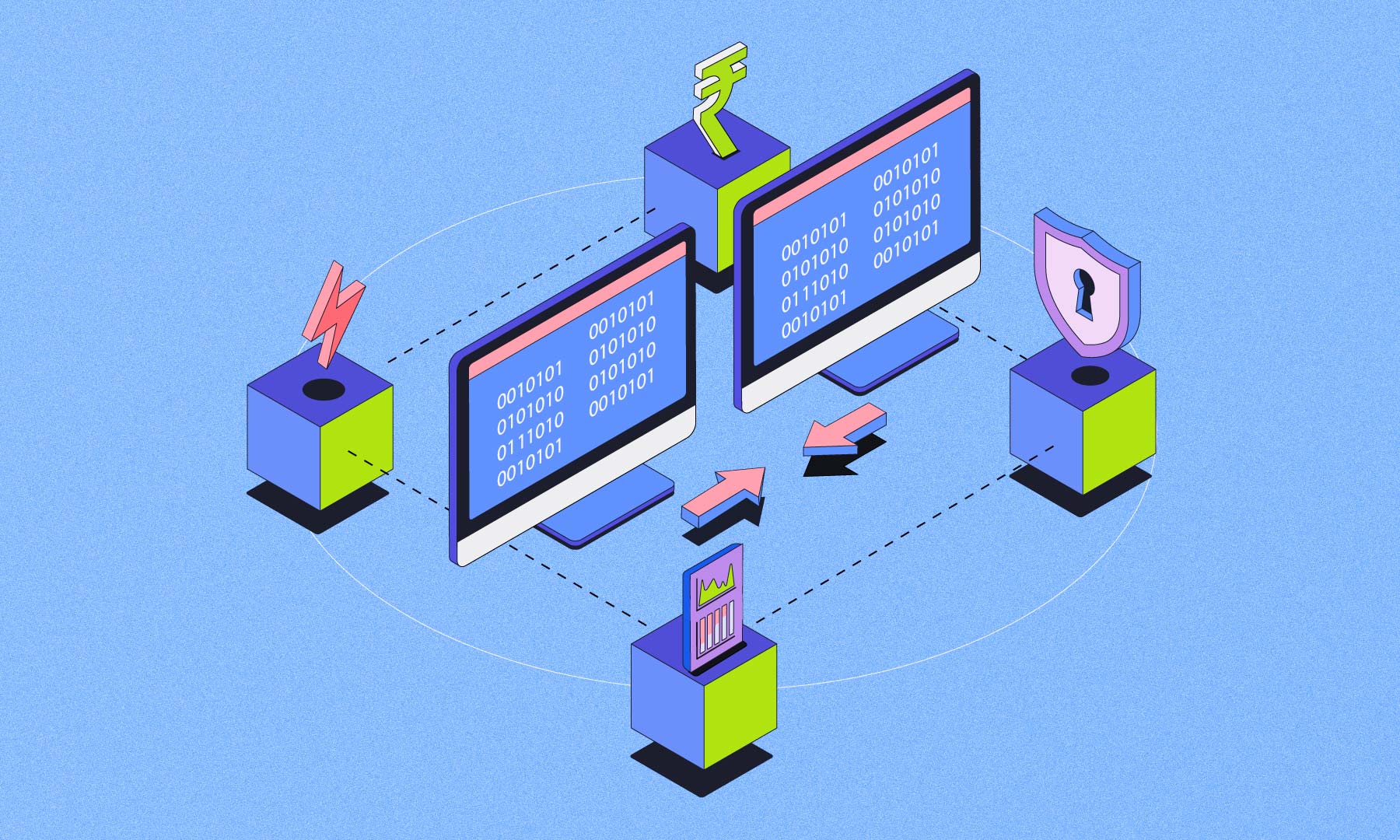
Imagine a world where your data is truly yours, unhackable, and shared only with your permission. Sounds like science fiction? It's closer than you think, thanks to the power of blockchain technology. Get ready to dive into how blockchain is poised to revolutionize data storage and sharing as we know it!
We've all experienced the frustrations of data breaches, centralized control, and the sheer lack of transparency in how our information is handled. Traditional systems often leave us vulnerable, handing our data over to large corporations with little say in how it's used. The constant worry about security and privacy is a heavy burden in our digital age.
Blockchain technology offers a compelling alternative. By decentralizing data storage and employing cryptographic security, blockchain creates a more secure, transparent, and user-centric data ecosystem. Instead of relying on a single point of control, data is distributed across a network of computers, making it incredibly difficult to tamper with or hack. This transforms data from a vulnerable asset into a secure, verifiable record.
In essence, blockchain empowers individuals with greater control over their information while fostering trust and accountability in data management. Key aspects include decentralization, enhanced security through cryptography, increased transparency with immutable records, and improved efficiency through streamlined processes. This paradigm shift is set to impact various industries, from healthcare and finance to supply chain management and beyond.
Enhanced Data Security and Privacy
I remember years ago, being utterly shocked when my bank notified me about a potential security breach. It felt like a violation, knowing my personal information was potentially compromised. This feeling is, unfortunately, becoming increasingly common. But blockchain offers a powerful solution. Imagine your medical records, stored not on a central server vulnerable to hackers, but across a decentralized network, encrypted and accessible only with your permission. This is the promise of blockchain. By distributing data across multiple nodes, blockchain significantly reduces the risk of a single point of failure, making it exponentially harder for malicious actors to gain access. Furthermore, cryptographic techniques ensure that sensitive information remains private and secure. This enhanced security and privacy are not just theoretical benefits; they are the foundation for a more trustworthy and responsible data ecosystem.
Increased Transparency and Accountability
Transparency and accountability are core tenets of blockchain technology. Every transaction or data update is recorded on the blockchain, creating an immutable and auditable trail. This means that once data is written to the blockchain, it cannot be altered or deleted, ensuring the integrity and reliability of the information. This transparency fosters trust between parties, as all participants have access to the same verifiable record. Imagine tracking a product's journey from origin to consumer, knowing that every step is recorded on the blockchain and cannot be tampered with. This level of transparency can revolutionize supply chain management, combating fraud and ensuring product authenticity. Similarly, in voting systems, blockchain can provide a secure and transparent platform, reducing the risk of manipulation and increasing voter confidence. The potential for increased transparency and accountability is immense, promising to reshape various industries and institutions.
The Myth of Blockchain's Infallibility
While blockchain is often touted as an impenetrable fortress, it's important to dispel the myth of its absolute infallibility. Although the core blockchain technology is highly secure, vulnerabilities can still exist in the surrounding ecosystem. For example, smart contracts, which automate processes on the blockchain, can contain bugs or flaws that malicious actors can exploit. Similarly, the security of a blockchain network is dependent on the security of the nodes participating in the network. If a significant number of nodes are compromised, the network could be vulnerable to attack. It's also important to recognize that blockchain is not a silver bullet for all data security and privacy concerns. While it can enhance security and transparency, it's crucial to implement appropriate security measures at all levels of the system to mitigate potential risks. Therefore, while blockchain offers significant advantages, it's essential to approach it with a realistic understanding of its limitations and potential vulnerabilities.
The Hidden Secret: Data Ownership
The hidden secret of blockchain's transformative power lies in its ability to fundamentally shift data ownership from centralized entities back to individuals. In traditional systems, our data is often controlled by large corporations, who profit from its use without our explicit consent. Blockchain empowers individuals to own and control their data, deciding who has access to it and how it is used. This shift in ownership has profound implications for privacy, security, and individual autonomy. Imagine a future where you can monetize your data, selling it directly to companies who need it, without the involvement of intermediaries. This is the potential of blockchain to create a more equitable and user-centric data ecosystem. By empowering individuals with ownership and control over their data, blockchain can unlock new opportunities and create a more just and transparent digital world.
Recommendations for Embracing Blockchain Data Solutions
If you're considering adopting blockchain for data storage and sharing, it's crucial to start with a clear understanding of your specific needs and goals. Don't jump on the bandwagon simply because it's the latest buzzword. Carefully evaluate the potential benefits and risks, and consider whether blockchain is truly the right solution for your specific use case. Start small, with a pilot project or proof-of-concept, to test the technology and gain experience. Choose a reputable blockchain platform and development team with a proven track record. Pay close attention to security, ensuring that your blockchain implementation is robust and resilient against potential attacks. Finally, be prepared for a learning curve, as blockchain technology can be complex. Invest in training and education to ensure that your team has the skills and knowledge necessary to effectively manage and maintain your blockchain data solutions.
Understanding Consensus Mechanisms
At the heart of every blockchain is a consensus mechanism, which is the process by which the network agrees on the validity of new transactions and data updates. Different blockchains use different consensus mechanisms, each with its own strengths and weaknesses. Proof-of-Work (Po W), used by Bitcoin, requires miners to solve complex computational problems to validate transactions, consuming significant amounts of energy. Proof-of-Stake (Po S) relies on validators who stake their cryptocurrency to participate in the consensus process, offering a more energy-efficient alternative. Other consensus mechanisms include Delegated Proof-of-Stake (DPo S), Practical Byzantine Fault Tolerance (PBFT), and Proof-of-Authority (Po A). Understanding the different consensus mechanisms is crucial for choosing the right blockchain platform for your specific needs, as each mechanism has different implications for security, scalability, and energy consumption. The choice of consensus mechanism can significantly impact the performance and efficiency of your blockchain data solutions.
Tips for Ensuring Data Integrity on the Blockchain
Data integrity is paramount when using blockchain for data storage and sharing. To ensure data integrity, it's crucial to implement robust validation and verification processes. Use cryptographic techniques, such as digital signatures and hash functions, to verify the authenticity and integrity of data. Implement strict access controls to limit who can write to the blockchain and ensure that only authorized users can modify data. Regularly audit your blockchain implementation to identify and address any potential vulnerabilities. Consider using a "zero-knowledge proof" to verify the validity of data without revealing the underlying information. Finally, ensure that your blockchain network is sufficiently decentralized to prevent any single entity from controlling or manipulating the data. By following these tips, you can significantly enhance the data integrity of your blockchain solutions and build trust in the reliability of your data.
The Role of Smart Contracts in Data Management
Smart contracts are self-executing contracts written in code and stored on the blockchain. They automatically enforce the terms of an agreement between parties, eliminating the need for intermediaries and reducing the risk of disputes. In the context of data management, smart contracts can be used to automate data sharing agreements, enforce data privacy policies, and ensure compliance with regulatory requirements. For example, a smart contract could be used to automatically share medical records between a patient and their doctor, while ensuring that the data is only used for authorized purposes. Smart contracts can also be used to create decentralized data marketplaces, where individuals can sell their data directly to companies, without the involvement of intermediaries. The use of smart contracts can significantly enhance the efficiency, transparency, and security of data management processes on the blockchain. They are a powerful tool for automating and enforcing data governance policies.
Fun Facts About Blockchain and Data
Did you know that the first blockchain, Bitcoin, was created in 2008 by an anonymous person or group using the pseudonym Satoshi Nakamoto? Or that the largest blockchain in terms of size is the Bitcoin blockchain, which contains hundreds of gigabytes of data? Blockchain technology is also being used to track everything from diamonds to tuna, ensuring their authenticity and preventing fraud. In Estonia, blockchain is used to secure citizens' medical records and other sensitive data. The potential applications of blockchain for data management are virtually limitless, ranging from supply chain management to voting systems to digital identity management. As blockchain technology continues to evolve, we can expect to see even more innovative and impactful applications emerge in the years to come. It's a fascinating and rapidly developing field with the potential to reshape the way we interact with data.
How to Get Started with Blockchain Data Solutions
If you're ready to explore the potential of blockchain for data storage and sharing, there are several ways to get started. Begin by educating yourself about blockchain technology and its various applications. There are numerous online resources, courses, and workshops available. Experiment with different blockchain platforms and tools, such as Ethereum, Hyperledger Fabric, and Corda. Consider joining a blockchain community or attending a blockchain conference to network with other professionals and learn from their experiences. Start with a small pilot project to test the technology and gain experience. Don't be afraid to ask for help or seek guidance from experienced blockchain developers and consultants. The key is to start small, learn continuously, and gradually build your expertise in blockchain data solutions.
What If Blockchain Fails to Deliver on Its Promises?
While blockchain holds immense potential, it's important to consider the possibility that it may not fully deliver on all of its promises. Scalability remains a significant challenge for many blockchain networks, limiting their ability to handle large volumes of data and transactions. Regulatory uncertainty also poses a risk, as governments around the world grapple with how to regulate blockchain technology. Security vulnerabilities, such as smart contract flaws, can still exist and be exploited by malicious actors. Widespread adoption of blockchain may also be hindered by a lack of understanding and awareness among the general public. If blockchain fails to overcome these challenges, it may not achieve its full potential to transform data storage and sharing. However, even if blockchain doesn't completely revolutionize the way we manage data, it will undoubtedly continue to play a significant role in shaping the future of data technology.
Listicle: 5 Ways Blockchain is Transforming Data
Here are 5 key ways blockchain is transforming data storage and sharing:
- Enhanced Security: Blockchain's decentralized and encrypted nature makes data more secure and resistant to hacking.
- Increased Transparency: Immutable records on the blockchain provide a verifiable and auditable trail of data transactions.
- Improved Data Integrity: Blockchain ensures that data is accurate, reliable, and cannot be tampered with.
- Empowered Data Ownership: Individuals gain greater control over their data, deciding who has access to it and how it is used.
- Streamlined Processes: Smart contracts automate data sharing agreements and reduce the need for intermediaries.
These are just a few of the many ways blockchain is revolutionizing the way we store and share data, paving the way for a more secure, transparent, and user-centric data ecosystem.
Question and Answer about How Blockchain Will Transform the Way We Store & Share Data
Q1: Is blockchain completely unhackable?
A1: While blockchain is extremely secure, it's not entirely unhackable. Vulnerabilities can exist in smart contracts or surrounding systems. However, the decentralized nature of blockchain makes it significantly more resistant to attacks than traditional centralized systems.
Q2: What are the main benefits of using blockchain for data storage?
A2: The main benefits include enhanced security, increased transparency, improved data integrity, and empowered data ownership.
Q3: Is blockchain only for cryptocurrencies?
A3: No, blockchain has a wide range of applications beyond cryptocurrencies, including supply chain management, healthcare, voting systems, and digital identity management.
Q4: How can I get started with blockchain data solutions?
A4: Start by educating yourself about blockchain technology, experimenting with different platforms, and considering a small pilot project to test the technology.
Conclusion of How Blockchain Will Transform the Way We Store & Share Data
Blockchain technology presents a paradigm shift in how we approach data storage and sharing. Its decentralized nature, robust security features, and inherent transparency offer compelling solutions to the challenges of traditional data systems. While challenges remain, the potential benefits of blockchain are undeniable. As the technology continues to mature, it's poised to revolutionize various industries and empower individuals with greater control over their data. Embracing blockchain data solutions can lead to a more secure, transparent, and trustworthy digital future.
